Top 10 Best App Monetization Strategies for Startups in 2026
Building a great app is only half the battle; turning it into a profitable business is the real challenge. The path from user acquisition to sustainable revenue is paved with strategic decisions, and choosing the right monetization model is the most critical one you'll make. This isn't just about picking a price; it's about aligning your product's value with user expectations to maximize lifetime value (LTV) and monthly recurring revenue (MRR). A flawed strategy can lead to high churn and missed opportunities, while a well-executed one creates a scalable, investor-friendly business.
For startups, particularly those from Seed to Series A, every engineering hour and marketing dollar counts. Getting your monetization right from the start is non-negotiable, as it directly impacts your ability to scale, retain users, and secure future funding. A poorly chosen model can alienate your user base, while the right one becomes a powerful engine for growth. This is why understanding the nuances between subscriptions, in-app purchases, and hybrid models is essential for product leaders and founders alike.
This comprehensive roundup cuts through the noise to deliver the ten best app monetization strategies for today's market. We will dive deep into each model, providing actionable implementation tips specifically for React Native developers using tools like RevenueCat and Stripe. You’ll learn the key performance indicators (KPIs) to track for each strategy, see real-world case examples, and get ideas for A/B pricing experiments that can significantly boost your revenue. Whether you're building a consumer app or a B2B marketplace, this guide provides a clear playbook to turn your user engagement into sustainable profit.
1. Freemium with In-App Purchases (IAP)
The freemium model is a powerhouse among app monetization strategies, offering a core version of your app for free to attract a large user base while charging for premium features, content, or services via In-App Purchases (IAP). This hybrid approach creates a low-friction entry point, allowing users to experience your app's value firsthand before committing to a purchase. It effectively balances user acquisition with revenue generation, making it a go-to for many successful startups.

This model shines in apps where value increases with usage, such as productivity tools like Slack, which limits message history in its free tier, or media apps like Spotify, which removes ads and enables offline downloads for premium subscribers. Duolingo masterfully uses IAP to sell streak freezes and other consumable perks, while Calm gates its extensive library of premium meditation courses behind a subscription.
Key Implementation Tips
- Strategic Paywall Placement: Introduce the paywall after a user has experienced a "magic moment." For example, a photo editing app could offer three free photo exports. On the fourth attempt, it presents the premium upgrade. Actionable insight: Trigger your paywall after a high-value action is completed to show users what they'll be missing, not before they understand the value.
- Tiered Subscription Structure: Offer multiple subscription tiers (e.g., Basic, Pro, Business). For example, a project management app might offer a free tier for individuals, a 'Pro' tier for small teams with collaboration tools, and a 'Business' tier with advanced security and analytics. Actionable insight: Price the middle tier as the "best value" to anchor user choice and guide them towards your preferred plan.
- Unified IAP Logic: For React Native apps, use a platform like RevenueCat to abstract away the complexities of managing subscriptions across both the Apple App Store and Google Play Store. This simplifies entitlement management and A/B testing pricing tiers.
- KPIs to Track: Focus on metrics like Conversion Rate (free to paid), Average Revenue Per User (ARPU), and Churn. Segmenting these KPIs by user cohort is crucial. To gain a deeper understanding of user behavior leading to these outcomes, you need to use the best analytics tools for mobile apps.
- Grace Periods & Win-Backs: Implement grace periods for payment failures. For example, if a user's credit card expires, give them a 7-day grace period to update their details instead of immediately revoking access. Actionable insight: This simple step can reduce involuntary churn by over 10% and protects your MRR.
2. Subscription-Based Recurring Revenue
The subscription model is the gold standard for creating predictable and scalable revenue streams, making it one of the most favored app monetization strategies by investors and founders alike. Users pay a recurring fee, typically monthly or annually, for continuous access to your app's core features, exclusive content, or ongoing services. This approach shifts the focus from one-time transactions to building long-term customer relationships and maximizing Lifetime Value (LTV).
This model is exceptionally effective for apps that deliver ongoing value, such as content platforms like Netflix or music streaming services like Spotify. It also thrives in the B2B SaaS space, with productivity tools like Notion and design platforms like Figma leveraging subscriptions to provide continuous access and updates. Meditation apps such as Headspace and Calm have also successfully used this model to offer ever-expanding libraries of content to a dedicated user base.
Key Implementation Tips
- Offer a Compelling Free Trial: Reduce signup friction by launching with a 3-to-7 day free trial. For example, a fitness app could offer a 7-day trial with full access to all workout plans and trainer support. Actionable insight: Send a reminder email or push notification 24 hours before the trial ends to improve conversion and reduce "surprise" charges.
- Incentivize Annual Plans: Test annual billing options with a clear discount. For example, if your monthly plan is $10/month, offer an annual plan for $96, explicitly highlighting "Save 20%" or "Get 2 Months Free." Actionable insight: This boosts upfront cash flow and increases LTV, as annual subscribers have significantly lower churn rates.
- Implement Proration Logic: When a user upgrades or downgrades their plan mid-cycle, use proration to calculate the cost difference. For example, if a user on a $10/month 'Basic' plan upgrades to a $20/month 'Pro' plan halfway through the month, charge them a prorated $5 for the remainder of the cycle. Actionable insight: This creates a seamless, fair user experience and removes friction from upselling.
- KPIs to Track: Relentlessly monitor Monthly Recurring Revenue (MRR), Churn Rate, and the CAC:LTV ratio. A healthy ratio is typically 1:3 or higher, indicating your customer acquisition efforts are profitable. Understanding and actively managing these metrics is key, and you can explore effective strategies to learn more about how to reduce customer churn.
- Proactive Engagement & Win-Backs: Use push notifications and email campaigns to re-engage users who show signs of lapsing. For example, if a user hasn't opened the app in 14 days, send a push notification highlighting a new feature or piece of content. Actionable insight: For churned users, an email offering "50% off your next 3 months" is a proven tactic to win back a significant percentage of subscribers.
3. Advertising and Sponsorships
The advertising model is a classic and highly effective monetization strategy, particularly for apps that can attract a large daily active user (DAU) base. It involves generating revenue by displaying ads from third-party networks or by securing direct brand sponsorships. This approach is powerful for apps where direct payment is a high barrier, such as hyper-casual games or content-driven platforms, as it allows you to monetize your entire user base, not just the small percentage who might pay for features.

This strategy is common in mobile gaming, with titles like Candy Crush using interstitial ads between levels and Clash of Clans offering in-game currency for watching rewarded video ads. Similarly, content platforms like YouTube and the free tier of Spotify integrate ads as a core part of their revenue model. Sponsorships take this a step further, with brands like Snapchat creating sponsored filters and lenses for events, creating a more native advertising experience.
Key Implementation Tips
- Prioritize Rewarded Video Ads: This format consistently delivers the highest eCPM (effective cost per mille). For example, in a mobile game, offer the user a choice: "Watch a 30-second video to earn 100 gold coins." Actionable insight: Since this is an opt-in format, it feels less intrusive to users, leading to higher engagement and better retention compared to forced interstitial ads.
- Implement Ad Mediation: Use a mediation platform like Google AdMob or ironSource to manage multiple ad networks. For example, your app can automatically request an ad from Meta, then Unity Ads, then AdColony, filling the impression with whichever network offers the highest price in real-time. Actionable insight: This competitive dynamic can increase your ad revenue by 15-30% without showing a single extra ad.
- Segment Your Ad Strategy: Avoid a one-size-fits-all approach. For example, create a user segment for "paying users" and stop showing them interstitial ads to avoid cannibalizing your IAP revenue. Actionable insight: For your most engaged non-paying users, you can test a slightly higher frequency of rewarded ads, as they are more likely to engage for in-app benefits. An effective ad strategy is a crucial part of a wider growth plan; you can learn more about how it fits into the broader picture of getting more users for your mobile app.
- KPIs to Track: Key metrics include eCPM, Fill Rate, Impressions per DAU, and Ad ARPU (Average Revenue Per User). Closely monitor how ad placements impact your core retention and engagement metrics.
- Navigate iOS ATT: The impact of Apple's App Tracking Transparency (ATT) is significant. Focus on contextual advertising. For example, a fitness app should prioritize showing ads for athletic wear or healthy food subscriptions, as these are contextually relevant and don't rely on cross-app tracking. Actionable insight: This privacy-first approach helps maintain ad performance in the post-IDFA world.
4. Marketplace Commissions and Fees
The marketplace model generates revenue by facilitating transactions between two or more distinct user groups, such as buyers and sellers or service providers and consumers. Instead of selling a product directly, the app acts as an intermediary, taking a commission or a fixed fee from each transaction. This strategy scales revenue directly with the platform's Gross Merchandise Volume (GMV), creating a powerful engine for growth.
This model is the backbone of the gig economy and peer-to-peer platforms. For example, Uber and DoorDash take a percentage commission from each ride or food order, while Airbnb charges fees to both hosts and guests. Similarly, Etsy profits from listing and transaction fees on its creative marketplace. Success hinges on solving the "chicken-and-egg" problem of attracting both supply and demand simultaneously. For monetization models centered around commissions and fees, exploring effective marketplace growth strategies is vital for sustainable revenue.
Key Implementation Tips
- Prioritize Seller Success: Initially, focus on building robust tools for the supply side. For example, an Etsy-like marketplace for artists should provide sellers with a dashboard to track sales, view traffic sources, and easily manage inventory. Actionable insight: When sellers succeed, they drive more GMV and stick with your platform, making your commission justifiable and sustainable.
- Transparent Fee Structure: Clearly display all fees before the final checkout. For example, Airbnb shows a detailed breakdown of the nightly rate, cleaning fee, service fee, and taxes before the user clicks "Confirm and Pay." Actionable insight: This builds trust and reduces cart abandonment, which can spike if users feel deceived by last-minute hidden charges.
- Test Variable Commission Rates: A one-size-fits-all commission may not work. For example, a B2B marketplace could charge a 15% commission on software sales (high margin) but only a 5% commission on hardware sales (low margin). Actionable insight: This flexibility allows you to attract a wider variety of sellers across different categories without making your take rate prohibitive for certain verticals.
- KPIs to Track: The most critical metrics are Gross Merchandise Volume (GMV), Take Rate (Net Revenue / GMV), and Customer Acquisition Cost (CAC) for both sides of the marketplace. Aim for a healthy take rate, typically between 15-25%, to balance growth with profitability.
- Streamline Payouts: Use a solution like Stripe Connect to automate payouts, manage compliance (like 1099s), and handle disputes. This significantly reduces operational overhead and seller friction, allowing you to focus on scaling the platform.
5. Freemium + Premium with Upsell Funnels
This strategy enhances the classic freemium model by building intelligent, automated upsell funnels that guide users toward a paid subscription. Instead of a static paywall, it uses behavioral triggers and engagement milestones to present the right offer at the right time. It combines free feature access with strategic feature gating, in-app messaging, and progressive paywall exposure to maximize conversions without alienating the user base. This makes it one of the most effective and user-centric app monetization strategies available today.
This model is expertly executed by apps like Notion, which allows free use until a user needs advanced collaboration tools, triggering an upsell. Similarly, Slack introduces a paywall when a team hits its message history limit, a natural friction point that highlights the value of its premium offering. Duolingo encourages upgrades by offering to protect a user's hard-earned streak, while Grammarly presents its premium upsell precisely when a user is reviewing advanced writing suggestions.
Key Implementation Tips
- Map the User Journey: Identify natural friction points or "aha!" moments. For example, a cloud storage app could trigger a storage upgrade offer precisely when a user tries to upload a file that exceeds their free quota. Actionable insight: Upselling at the point of need feels like a helpful solution, not a disruptive ad, dramatically increasing conversion rates.
- Segment and Target Users: Group users by their engagement level. For example, create a "Power User" segment for those who log in daily and use advanced features. Target them with an offer for the annual pro plan. For new users, focus on onboarding and feature discovery. Actionable insight: Personalized offers based on behavior can outperform generic paywalls by over 50%.
- A/B Test Paywall Messaging: Test value-based messaging against feature-based messaging. For example, an email marketing app could test "Send to 10,000 subscribers" (feature) vs. "Grow your audience without limits" (value). Actionable insight: Value-driven copy that focuses on the user's desired outcome almost always converts better.
- Implement Soft and Hard Paywalls: First, introduce a soft paywall. For example, show a dismissible banner that says "Enjoying the app? Unlock advanced analytics with Pro." Actionable insight: If the user dismisses it three times, then implement a hard paywall that blocks the feature until they upgrade, creating a progressive and less jarring experience.
- Leverage Price Anchoring: Always present the annual plan with a clear discount next to the monthly price. For example, display "$12/month" next to "$96/year (Save 33%)." Actionable insight: This makes the annual plan seem like a significantly better deal, driving users towards a higher LTV commitment.
6. Consumable IAP and Virtual Currency
This strategy centers on selling finite, single-use items or virtual currencies that users purchase to enhance their experience. Unlike one-time unlocks, consumables are designed to be bought repeatedly, creating frequent monetization events. This model excels at generating high lifetime value (LTV) from engaged users by allowing them to pay for convenience, faster progression, or exclusive content. It's one of the best app monetization strategies for creating a dynamic and repeatable revenue stream.
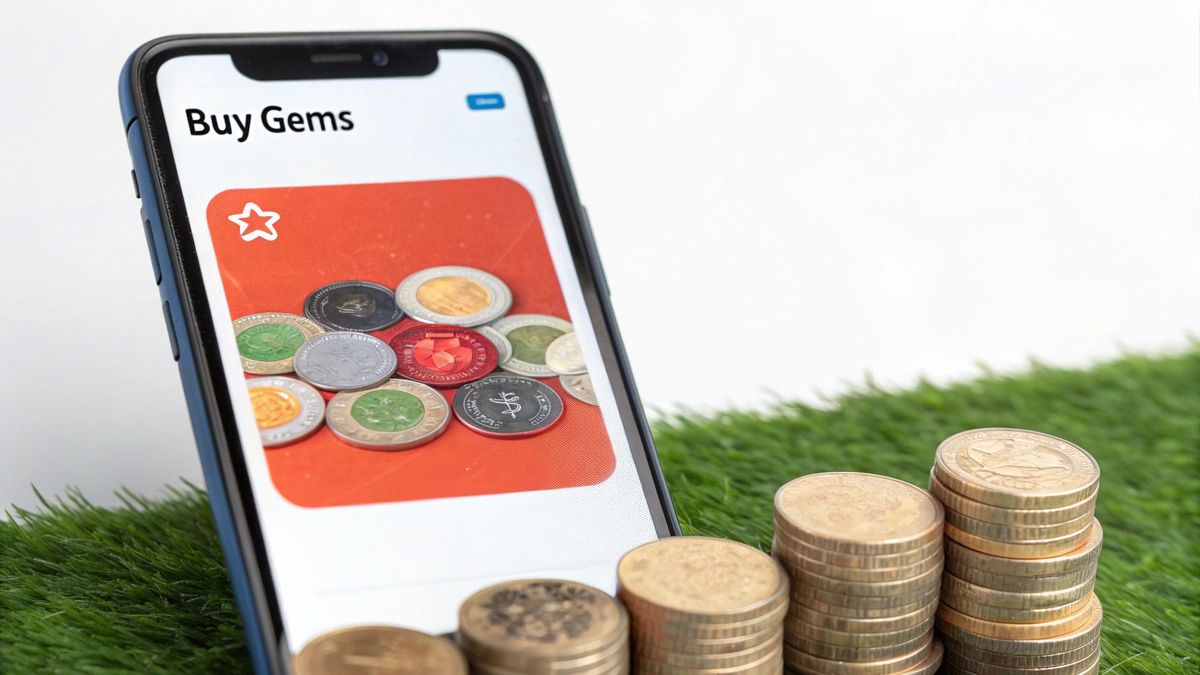
This model is the backbone of the mobile gaming industry. Think of Candy Crush selling boosters and extra moves, or Clash of Clans letting players buy gems to accelerate construction. The model also extends beyond games; dating apps like Tinder use it for Super Likes, and social platforms like Twitch use "Bits" for streamer donations. The core principle is offering a core free experience while allowing paying users to accelerate or amplify their progress.
Key Implementation Tips
- Implement a Dual-Currency System: Use a "soft currency" earned through gameplay (e.g., gold) and a "hard currency" primarily purchased with real money (e.g., gems). For example, a player can earn gold by winning matches but needs gems to buy exclusive cosmetic items. Actionable insight: This system allows free players to feel progress while creating a clear monetization path for premium items.
- Leverage Goldilocks Pricing: Structure your currency bundles to make the mid-tier option the most appealing. For example, offer packs at $4.99 (500 gems), $19.99 (2500 gems - labeled 'Best Value'), and $49.99 (7000 gems). Actionable insight: Most users will gravitate to the middle option, significantly increasing your Average Transaction Value compared to only offering small packs.
- Balance the Economy: Your in-app economy must be carefully balanced. For example, ensure a powerful in-game item can be earned in 10 hours of play or purchased instantly for $5 worth of gems. Actionable insight: If the grind is too long (e.g., 100 hours), free users will churn. If it's too short, paying users have no incentive to spend.
- KPIs to Track: The key metrics are Average Revenue Per Paying User (ARPPU), LTV, and Conversion Rate. It's crucial to segment these by user cohorts to identify your "whales" (top-spending users) and understand what drives their purchasing behavior.
- Create Scarcity and Urgency: Use limited-time offers (LTOs). For example, offer a "Weekend Warrior Bundle" with exclusive items and currency, available only from Friday to Sunday. Actionable insight: This creates FOMO (fear of missing out) and drives purchase spikes, converting users who might otherwise wait.
7. Hybrid B2B2C: Seller Subscriptions + Commission
The hybrid B2B2C model creates a powerful, dual-revenue stream by combining predictable subscription fees from sellers with a variable commission on transactions. This approach stabilizes revenue with recurring payments from service providers (the "B2B" side) while capturing upside potential as marketplace activity and Gross Merchandise Volume (GMV) grow (the "B2C" side). It's one of the most robust app monetization strategies for two-sided marketplaces, aligning platform success with seller success.
This strategy is perfectly suited for platforms where sellers or service providers gain significant value from accessing a large buyer base. For example, DoorDash charges restaurants a monthly subscription fee for platform access and marketing tools, plus a 15-25% commission on each order. Similarly, TaskRabbit requires service pros to pay a recurring fee to be listed, and the platform also takes a percentage of each completed job, ensuring revenue from both access and usage.
Key Implementation Tips
- Segment Seller Tiers: Price subscriptions based on seller needs. For example, a freelancer marketplace could offer a '$29/month Pro' plan that allows bidding on 10 projects and a '$99/month Agency' plan with unlimited bids and a featured profile badge. Actionable insight: This allows you to capture revenue from different seller segments without pricing out smaller players.
- Offer Annual Discounts: Provide a significant discount, typically 20-25%, for annual subscription commitments. For example, frame the choice as "$49/month or just $468/year (Save 20%)." Actionable insight: This immediately improves your cash flow and dramatically reduces seller churn, as they are committed for a full year.
- Build a Seller ROI Dashboard: Transparency is key to reducing churn. For example, a real estate platform could show agents a dashboard with "Leads Received: 50," "Estimated Commission Value: $15,000," "Your Platform Cost: $200." Actionable insight: Clearly demonstrating a positive ROI makes the subscription fee feel like an investment, not a cost.
- KPIs to Track: Monitor Seller Churn Rate, Gross Merchandise Volume (GMV), and Blended Take Rate (the total platform revenue as a percentage of GMV). Segmenting seller retention by acquisition channel will help you optimize your marketing spend.
- Structure for Lock-In: Implement features in premium tiers that create stickiness. For example, a booking platform could offer a premium tier that includes a free CRM to manage client relationships. Actionable insight: If a seller's client data is managed through your platform, the switching cost to a competitor becomes significantly higher, boosting retention.
8. Premium Content and DLC (Downloadable Content)
This strategy involves offering a core application for free or a one-time purchase, then monetizing through optional, paid expansions or premium content packs. Often associated with gaming, this model is highly effective for any app where content is king, from educational platforms to creative suites. It allows you to build an initial user base with a low barrier to entry and then capture high-value revenue from your most engaged "superfans" who crave more.
This model is a staple in the gaming world, with titles like The Sims and Destiny 2 building entire ecosystems around expansion packs and seasonal content. However, its principles are just as powerful for non-gaming apps. Masterclass provides access to some classes for free while gating its most in-demand expert-led courses behind a premium paywall. Similarly, an app offering design assets could sell specialized brush packs or exclusive font libraries as DLC.
Key Implementation Tips
- Create a Content Teaser: Offer a free preview of premium content. For example, an educational app can allow users to watch the first 10 minutes of a premium video course for free before prompting them to purchase full access. Actionable insight: This "try before you buy" approach demonstrates value upfront and can increase conversion rates by 20-30%.
- Bundle for Value: Group related DLC packs into bundles and offer them at a discount. For example, a music creation app could sell individual sound packs for $5 each or a "Producer's Bundle" with five packs for $19.99. Actionable insight: Bundling increases the average order value and encourages users to invest more deeply into your content ecosystem.
- Leverage Urgency with Seasons: Use a seasonal model. For example, a fitness app could launch an 8-week "Summer Shred" workout plan with exclusive videos and meal guides, available for purchase only during spring. Actionable insight: This creates powerful FOMO (fear of missing out) and drives predictable revenue spikes around new content launches.
- KPIs to Track: Key metrics include Attach Rate (percentage of base app owners who purchase DLC), Average Revenue Per Paying User (ARPPU), and DLC Adoption Rate. High refund rates on a specific pack can signal a mismatch between perceived value and price.
- Price Based on Value, Not Just Cost: Price your DLC based on the perceived value and the development effort. For example, a 10-hour expansion pack with new game mechanics should be priced significantly higher than a small pack of cosmetic skins. Actionable insight: A/B test price points ($9.99 vs $14.99) for similar content tiers to find the revenue-maximizing sweet spot.
9. White-Label and API Licensing
Shifting from a direct-to-consumer model, white-label and API licensing monetizes your core technology by making it available to other businesses. This B2B strategy involves selling access to your app's underlying infrastructure, features, or data via an API, or offering a re-brandable version of your entire application (a white-label solution). It's a powerful way to generate a new revenue stream, especially for startups with robust, scalable technology.
This approach transforms your in-house tech into a product itself, opening up markets you couldn't reach alone. For example, Stripe offers a payments API that powers countless other apps, while Twilio provides communication APIs for SMS and voice. Similarly, Mapbox licenses its mapping technology, and Auth0 provides a plug-and-play identity management API, saving other developers thousands of hours.
Key Implementation Tips
- Tiered API Access & SLAs: Structure your pricing in tiers based on usage and support. For example, offer a '$99/month Startup' plan with 100,000 API calls and email support, and a '$999/month Enterprise' plan with 5 million calls and a dedicated support channel with a 1-hour response time SLA. Actionable insight: This allows you to serve the entire market, from small developers to large enterprises, maximizing your revenue potential.
- Comprehensive Documentation & SDKs: Your API is only as good as its documentation. For example, provide clear, copy-pasteable code examples for authenticating, making calls, and handling errors in multiple programming languages (e.g., Python, JavaScript, Java). Actionable insight: This drastically reduces the time-to-value for developers, making them more likely to adopt and pay for your service.
- Implement Robust Metering: Accurate billing is non-negotiable. Use tools like Stripe Metered Billing to track API calls or other usage metrics precisely. For example, provide customers with a live dashboard showing their current usage against their plan limits. Actionable insight: This transparency prevents billing disputes and helps customers understand when they need to upgrade.
- KPIs to Track: Focus on B2B SaaS metrics like Monthly Recurring Revenue (MRR), API Usage Growth, and Customer Churn Rate (segmented by plan). Also monitor Time to First API Call as a key onboarding metric.
- Hybrid Sales Model: Combine a self-serve, low-touch model for smaller developers with a direct sales team. For example, allow anyone to sign up for a free or startup-tier plan with a credit card. Actionable insight: Use product data to identify accounts with high usage growth and have your sales team proactively reach out to them to discuss an enterprise contract. For those considering offering their API as a monetizable product, you might want to explore five ways to earn revenue through APIs.
10. Usage-Based / Metered Billing
Usage-based or metered billing is a pay-as-you-go model where customers are charged based on their actual consumption of a service. This strategy directly aligns the price a user pays with the value they receive, making it one of the most transparent and fair app monetization strategies. It's particularly effective for APIs, infrastructure, and communication platforms where usage can vary dramatically between customers, as it removes the barrier of a high upfront commitment and allows revenue to scale alongside user growth.
This model is the backbone of major tech platforms. Amazon Web Services (AWS) charges for specific compute, storage, and bandwidth usage, while Twilio bills per API call, SMS message sent, or minute used. Similarly, Stripe's success is built on a per-transaction fee, directly tying its revenue to its customers' success. Datadog and SendGrid also leverage this approach, billing for metrics monitored or emails sent, respectively.
Key Implementation Tips
- Prevent "Bill Shock": The biggest risk is surprising users with a large bill. For example, implement automated email alerts that notify a user when they've used 50%, 90%, and 100% of their budgeted amount for the month. Actionable insight: This builds trust and predictability, turning a potential churn event into an opportunity for the user to consciously upgrade their plan.
- Offer a Generous Free Tier: Provide a free allotment of usage. For example, an email API service could offer the first 1,000 emails per month completely free. Actionable insight: This allows developers to fully build and test their integration without any financial risk, dramatically lowering the barrier to adoption and creating a pipeline of future paying customers.
- Hybridize for Predictability: Combine a low-cost base subscription fee with usage charges. For example, a video hosting platform might charge $20/month, which includes 100 hours of video streaming, with additional hours billed at $0.10/hour. Actionable insight: This model provides you with a predictable MRR baseline while still capturing the upside from high-volume users.
- Implement Committed-Use Discounts: Encourage long-term commitment by offering discounts for pre-payment. For example, offer a 15% discount to a customer who prepays for 10 million API calls to be used over the next 12 months. Actionable insight: This improves your cash flow and increases customer LTV by locking them into your platform.
- KPIs to Track: Key metrics include Usage Growth, Average Revenue Per User (ARPU), and Net Revenue Retention (NRR). A high NRR (over 100%) indicates that revenue from existing customers is growing, a strong sign of product-market fit in a usage-based model.
Top 10 App Monetization Strategies Comparison
| Model | Implementation complexity | Resource requirements | Expected outcomes | Ideal use cases | Key advantages |
|---|---|---|---|---|---|
| Freemium with In-App Purchases (IAP) | Medium — native IAP, paywall, A/B testing | Moderate dev, analytics, marketing; needs DAU scale | Moderate recurring revenue; low CAC; needs volume for meaningful revenue | Consumer apps with viral growth and frequent engagement | Broad distribution, proven conversions, native platform alignment |
| Subscription-Based Recurring Revenue | Medium–High — billing, trials, dunning, proration | Billing infra (Stripe/RevenueCat), retention ops, content/dev resources | Predictable MRR, high LTV if retention strong | Content platforms, productivity SaaS, services | Predictable revenue, investor-friendly, scalable CAC:LTV |
| Advertising and Sponsorships | Low–Medium — ad SDKs, mediation, placements | High DAU, ad ops, analytics, partnerships | Immediate monetization; low per-user revenue; scale-dependent | Games, media, social apps with heavy usage | Low user friction, quick monetization of free users |
| Marketplace Commissions and Fees | High — payments, KYC, disputes, fraud prevention | Seller onboarding, payouts (Stripe Connect), compliance, ops | Revenue scales with GMV; high upside with network effects | Two-sided marketplaces, gig economy, P2P commerce | Scales with GMV, network effects, seller-aligned growth |
| Freemium + Premium with Upsell Funnels | High — behavioral triggers, segmentation, experimentation | Strong analytics, CRO, paywall tooling, marketing automation | Higher conversion with maintained retention when optimized | Education, collaboration, productivity apps needing contextual upsells | Contextual timing boosts conversion; retention-friendly monetization |
| Consumable IAP and Virtual Currency | Medium — currency systems, balancing, anti-fraud | Live ops, game design, analytics, store integration | High ARPU from repeat purchases and "whales"; frequent transactions | Mobile games, social apps with microtransactions | Multiple purchase touchpoints per session; high ARPU potential |
| Hybrid B2B2C: Seller Subscriptions + Commission | Very high — dual billing models, seller tools, pricing complexity | Sales, seller support, payouts, platform ops, compliance | Predictable subscription revenue + commission upside as GMV grows | Marketplaces with professional sellers and repeat buyers | Diversified revenue, higher seller LTV, predictable base revenue |
| Premium Content and DLC (Downloadable Content) | Medium — content production, purchase flows, releases | Content creators, production budget, marketing | High-margin one-time sales; retention via new content releases | Games, courses, media franchises, specialist content platforms | High margins, ownership perception, reduces subscription fatigue |
| White-Label and API Licensing | High — scalable API, SLAs, billing, enterprise support | Engineering for scale, docs/SDKs, sales, support, metering | High-margin recurring ARR; enterprise customers and stable contracts | B2B SaaS, platforms with reusable technology and partners | Recurring high-margin revenue, broad distribution via partners |
| Usage-Based / Metered Billing | Medium–High — metering, real-time reporting, billing accuracy | Telemetry, billing platform, dashboards, support | Revenue aligned with consumption; variable predictability; high upside from heavy users | Cloud services, APIs, infrastructure, messaging/comms platforms |
Strategy is Just the Start: The Path to Profitable Execution
Choosing from the best app monetization strategies is a critical first step, but it’s the execution that ultimately determines success or failure. The models we've explored, from recurring subscriptions and one-time IAPs to complex hybrid approaches like B2B2C commissions, are not static formulas. They are dynamic frameworks that must be molded to fit your unique product, user base, and market position. The difference between a struggling app and a market leader often comes down to one core principle: treating monetization as a product feature, not an afterthought.
This means your monetization engine requires the same level of attention, iteration, and data-driven rigor as your core user experience. Your initial choice, whether it's a freemium model to maximize user acquisition or a premium subscription to target a niche audience, is just your starting hypothesis. The real work begins when you start gathering data and learning from your users' behavior.
From Hypothesis to High-Growth Engine
The journey from selecting a strategy to achieving predictable revenue is paved with disciplined experimentation. The most successful startups don't just "set and forget" their pricing. They build a culture of continuous optimization around their revenue model.
Your actionable next steps should follow a clear, iterative loop:
- Align and Instrument: Choose the primary monetization model that provides the most direct path between the value your app delivers and the revenue it generates. Immediately instrument your analytics to track the core KPIs discussed, such as MRR, LTV, ARPU, and churn. Tools like Mixpanel or Amplitude are essential for understanding user cohorts and conversion funnels.
- Implement with Agility: Use robust platforms like RevenueCat and Stripe to abstract away the complexities of managing subscriptions and IAPs across iOS and Android. This allows your engineering team, especially a lean React Native team, to focus on building features, not wrestling with platform-specific payment APIs.
- Test and Learn: Your paywall, pricing tiers, and promotional offers are your most powerful levers. Begin A/B testing immediately. Don't just test prices; test the value proposition. For instance, a fitness app might test a "Yearly Plan - Save 50%" against a "Commit to Your Health - Get 6 Months Free" message to see which framing resonates more.
- Listen and Adapt: User feedback is gold. Are users churning after a specific period? Perhaps your onboarding fails to demonstrate long-term value. Are conversion rates low? Maybe your free tier is too generous, or the value of the premium features isn't clear enough. This qualitative data, combined with your quantitative KPIs, provides a full picture to guide your next move.
Key Takeaway: The optimal monetization strategy isn't found in an article; it's discovered through a relentless process of building, measuring, and learning. Your first choice is your baseline, not your destination.
The True Competitive Advantage
In a crowded market, a well-executed monetization strategy is more than just a source of funding; it becomes a powerful competitive moat. By deeply understanding what your users are willing to pay for, you can align your product roadmap directly with revenue-generating activities. This creates a virtuous cycle: revenue funds the development of features that users value most, which in turn drives more revenue and strengthens user loyalty.
Mastering this loop allows you to out-invest and out-maneuver competitors who treat monetization as a simple price tag. It transforms your app from a project into a sustainable, scalable business. The path forward requires a blend of strategic foresight, analytical discipline, and the technical agility to implement and test ideas quickly. By embracing this iterative mindset, you can turn your chosen monetization model into a robust engine for long-term growth and profitability.
Ready to build a revenue-focused app without the guesswork? Vermillion specializes in creating high-performance React Native applications with monetization baked in from day one. We partner with startups to implement and optimize the very strategies discussed here, helping you achieve product-market fit and predictable revenue faster. Learn more about our performance-based model.